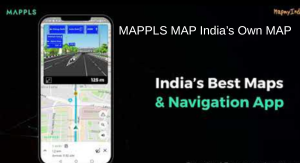
In a moment that feels both familiar and fresh, the idea of “navigation” is being reinvented—this time through a home-grown lens. Enter Mappls, an app by MapmyIndia, which is deliberately built with Indian geography, traffic realities, and user behaviour in mind.
While most of us default to Google Maps for directions, Mappls is quietly gaining ground — and for good reason.
Why Mappls stands out
Here’s what makes it more than “just another map app” in India’s context:
Hyper-local detail designed for Indian roads: Speed breakers, potholes, slip roads, exact building entrances — features that global mapping apps often miss.
3D junction & lane-specific visuals: When you’re driving through complex flyovers or service roads, Mappls shows a 3D view of the junction so you know exactly which lane to take.
Regional language support: Mappls supports turn-by-turn navigation in 9 Indian languages — Hindi, Tamil, Telugu, Marathi, Gujarati and more — which makes it easier for many users.
India-first innovation: From digital address systems (Mappls Pin) to toll-cost calculators and live signal timers in cities like Bengaluru, the app is built for Indian drivers.
How to try it
Download the app from the App Store or Google Play (search for Mappls).
Sign in, grant location and navigation permissions.
Explore features: set a destination, check out the 3D view of junctions, and see if it shows speed-breaker alerts or pothole warnings.
Use language settings to switch to your preferred regional language.
Compare the route with Google Maps to see how it handles your localities.
Why this matters
For daily commuting in Indian cities and rural roads, navigation isn’t just “turn left/right” — it’s dealing with service lanes, potholes, narrow lanes, unexpected U-turns, etc. Mappls’s local-first design helps bridge that gap.
Supporting a local technology also aligns with initiatives for digital sovereignty and indigenous innovation.
In a world where maps are platform infrastructure (navigation, delivery, logistics), having a strong local player adds resilience.
Things to keep in mind
Global coverage: Google Maps still leads when you’re travelling abroad or in remote international regions. Mappls excels in India.
Data updates: While Mappls has strong India-focus, ensure you’re using the latest version so your maps are current.
Habit & integration: If you’re deeply embedded in the Google ecosystem (Google Assistant, Google Home, wearable devices), switching will require a little adjustment.
Evaluate offline use, voice navigation, and compatibility with in-car systems in your region.
Key Take-aways
Mappls represents a compelling “India-centric” navigation alternative tailored to local conditions.
If you drive regularly in Indian cities or on rural roads, it’s worth trying — you might find more accurate lanes, hazard alerts, and regional language support.
The battle of maps is not only about “which app is more popular” but “which one understands you and your roads”.
Ultimately, it’s great to have more choice — and Mappls is bringing that choice home.
FAQ
Q1. What makes Mappls better than Google Maps for India?
Mappls offers features like detection of potholes/speed-breakers, 3D junction views, region-specific lanes and address systems (Mappls Pin) designed for Indian roads.
Q2. Does Mappls work across all of India?
Yes — the app claims pan-India coverage and supports multiple languages; however, performance may vary in extremely remote/rural locales.
Q3. Is Mappls free to use?
Yes, the basic navigation and mapping features are free. Additional services (fleet tracking, enterprise SDKs) may come under paid models.
Q4. Can I switch from Google Maps to Mappls easily?
Yes—you can use both side-by-side. Evaluate your regular routes and see how Mappls handles them. Switching only becomes a problem if you rely heavily on Google ecosystem features.
Q5. Are my privacy/data safe on Mappls?
MapmyIndia emphasises that Mappls is “100% Swadeshi” (Indian origin) and built with Indian data-governance in mind.