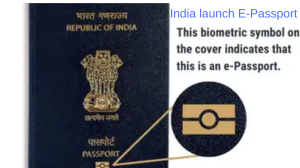
Imagine you’re travelling abroad and at immigration you simply walk through an e-gate, your passport’s embedded chip silently verifies your identity, your documents flick past and you’re cleared in seconds. That’s the promise of the newly launched e-passport in India.
What’s new
India has officially launched the e-passport — a next-generation travel document embedded with a Radio-Frequency Identification (RFID) chip and antenna, storing biometric and demographic data of the holder. ([Outlook Traveller][1]) This upgrade comes under the larger framework of the Passport Seva Programme 2.0.
The rollout began with pilot issuance on April 1 2024. ([www.ndtv.com][3]) Currently, it is available at select regional passport offices and will expand nationwide.
Eligibility & Application Process
Eligibility remains almost the same as a standard passport — any Indian citizen eligible for a fresh or renewed ordinary passport can apply for the e-passport.
How to apply:
1. Visit the official Passport Seva Portal and register or log in.
2. Fill in the application form for a fresh or re-issue and select the service for e-passport.
3. Pay the relevant fee (same as regular passport in many cases) and book an appointment at your nearest PSK/POPSK.
4. Attend the appointment: submit documents, complete biometric capture (photo, fingerprints, iris where applicable) and verification.
Key Features & Benefits
The e-passport meets international standards (International Civil Aviation Organization / ICAO) for biometric travel documents.
Embedded RFID chip helps in faster immigration processing, especially in airports with automated e-gates.
Enhanced security: biometric data, digital signatures and encryption reduce risk of forging or tampering.
Existing passports remain valid until expiry — you don’t need to replace your current booklet immediately.
What This Means for Travellers & India
For travellers, this means smoother outbound and inbound travel, less time in queues, and stronger identity protection. For India, it marks a digital leap in its travel-document infrastructure and aligns with global best practices.
Things to Keep in Mind
Even if you apply for an e-passport, availability may depend on your region/PSK because of phased rollout.
Cost may remain the same as regular passport initially; check with your issuing office.
Because biometric capture and document verification are required, you’ll still have to attend the PSK appointment — nothing is entirely “paperless”.
When travelling to countries with e-gate access, you can benefit more effectively if your passport is chip-enabled.
Key Takeaways
India’s e-passport is a significant upgrade in how travel documents work.
The process for you remains largely familiar — apply via Passport Seva, attend PSK — but the document you receive will be technology-enhanced.
If you travel internationally frequently or want future-ready credentials, opting for an e-passport is a good move.
FAQ
Q1. What exactly is an e-passport?
An e-passport is a passport with an embedded chip (RFID) inside its cover, storing biometric and demographic data of the holder, offering higher security and global compatibility.
Q2. Are all Indian citizens eligible for the e-passport?
Yes — anyone eligible for a regular ordinary passport can opt for the e-passport where available.
Q3. Will I have to pay more for an e-passport than a regular passport?
Not necessarily — many sources indicate the fee remains the same as the existing passport fee structure.
Q4. Does my current passport become invalid when the e-passport launches?
No — your existing passport remains valid until its expiry. You can choose to apply for e-passport at renewal or re-issue.
Q5. When will it be available everywhere in India?
The phased rollout is underway — initial offices in 13 + cities are issuing e-passports, and nationwide coverage is planned.