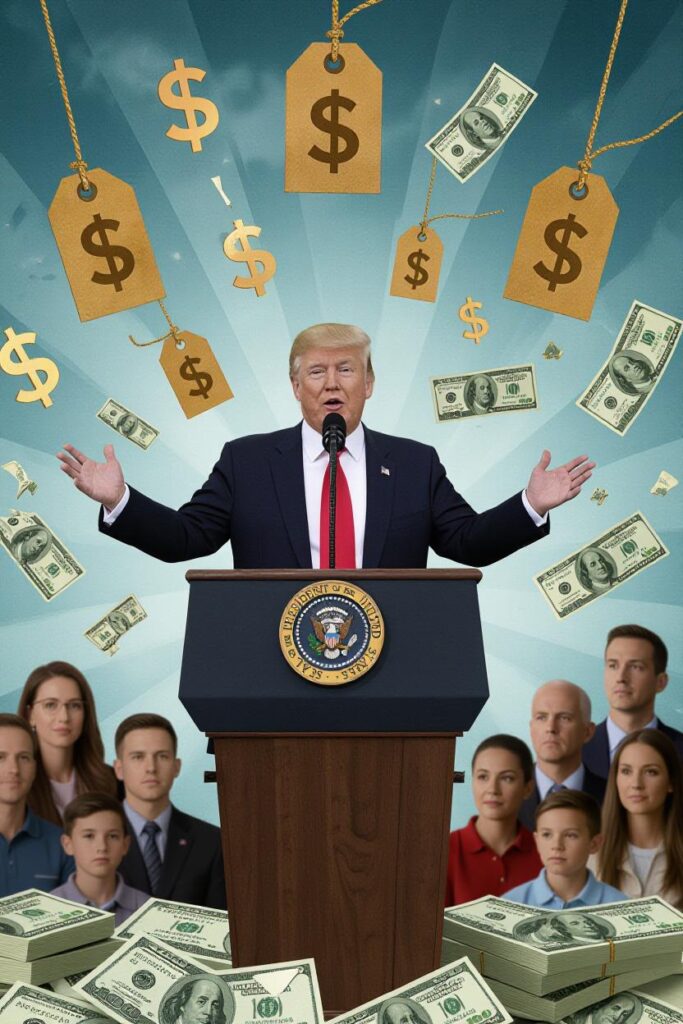
Donald Trump’s economic policies have always been controversial, but his latest push for steep tariffs on imports has sparked a new debate. According to a recent report, these tariffs could potentially push nearly 1 million Americans into poverty.
While Trump argues that tariffs protect U.S. industries and jobs, economists warn that the hidden costs of tariffs—higher prices for everyday goods, job losses in certain sectors, and economic inequality—could hurt American families more than help them.
What Are Tariffs and Why Do They Matter?
Tariffs are essentially taxes on imported goods. When the U.S. imposes tariffs on products from other countries (like China, India, or Mexico), foreign goods become more expensive. The idea is to encourage Americans to buy domestic products, supporting U.S. industries.
But here’s the catch:
- Companies often pass these extra costs on to consumers.
- Everyday items—from groceries to electronics—become costlier.
- Families already living paycheck-to-paycheck feel the pinch the hardest.
How Trump’s Tariffs Could Impact Americans
The new report suggests that Trump’s heavy tariffs could push around 1 million Americans below the poverty line. Let’s break down the possible impacts:
- Rising Consumer Prices
Essentials like food, clothing, and electronics could see significant price hikes. - Job Losses in Certain Sectors
While some industries (like steel) may benefit, others relying on global supply chains could suffer. - Low-Income Families at Risk
Families already spending most of their income on essentials will be the hardest hit. - Increased Inflation Pressure
Higher tariffs could fuel inflation, further squeezing household budgets.
The Political Angle
Trump has long touted tariffs as a “pro-America” strategy, framing them as a way to fight unfair trade practices, especially with China. However, critics argue that tariffs are more about political optics than economic reality.
Some analysts also believe this move could be part of Trump’s 2025 election campaign rhetoric—appealing to working-class voters frustrated with globalization, even if the economic evidence shows otherwise.
Global Repercussions
If implemented, Trump’s tariffs could:
- Trigger a global trade war, with countries retaliating against U.S. exports.
- Hurt American farmers who rely on international markets.
- Strain relationships with key allies and trade partners.
The ripple effects could extend beyond the U.S., impacting global supply chains and pushing up costs worldwide.
Donald Trump’s proposed heavy tariffs may look like a bold move to protect American industries, but the reality could be far more damaging for everyday citizens. With the risk of nearly 1 million Americans being pushed into poverty, the debate is not just about trade—it’s about the future of the U.S. economy and the lives of millions of families.
As the 2025 elections approach, tariffs will likely remain a hot-button issue—one that could define Trump’s campaign and America’s economic direction for years to come.
FAQ
Q1. Why could tariffs push Americans into poverty?
Tariffs increase the price of imported goods, leading to higher living costs. Low-income households are most vulnerable.
Q2. Has Trump used tariffs before?
Yes. During his previous presidency, Trump imposed tariffs on China and other countries, sparking trade tensions.
Q3. Who benefits from tariffs?
Certain U.S. industries (like steel and manufacturing) may benefit, but consumers usually face higher costs.
Q4. How many Americans could be affected?
The report estimates that nearly 1 million Americans could fall into poverty if heavy tariffs are implemented.
Q5. Will tariffs reduce imports significantly?
Not always. Many imports, such as electronics and clothes, have limited domestic alternatives, so Americans end up paying more.