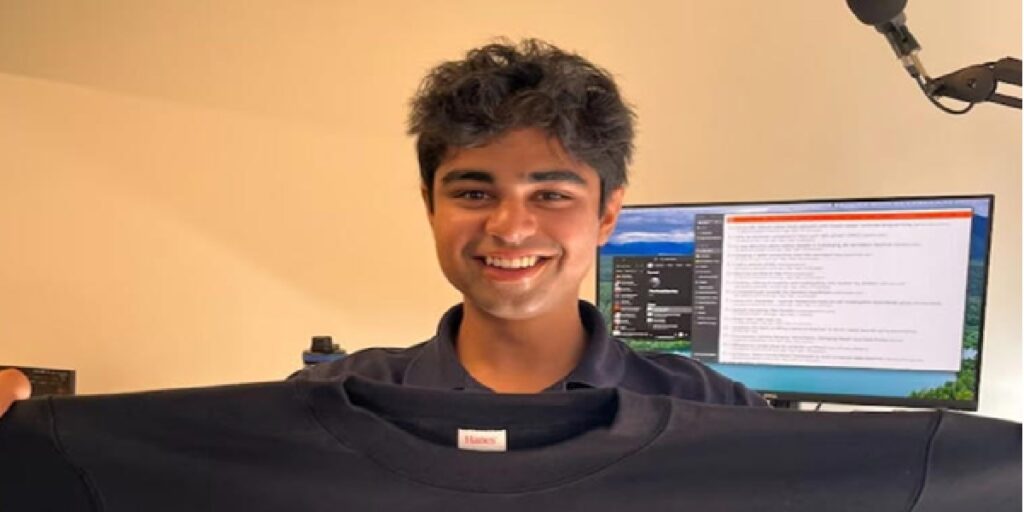
Indian-Origin CEO Offers ₹1.5 Crore Salary to Freshers, But There’s a Catch
In the age of skyrocketing salaries and cutthroat competition, the latest news from Indian-origin CEO Daksh Gupta has stirred massive debate. Gupta recently announced an offer of ₹1.5 crore per annum salary for freshers—a dream come true for many young graduates. But there’s one big condition: the 9-9-6 work rule.
This revelation has split opinions across social media and professional circles. While some hail it as an extraordinary opportunity for freshers to prove themselves, others question whether the trade-off is worth sacrificing health and work-life balance.
What Is the 9-9-6 Rule?
The 9-9-6 rule refers to a work culture popularized in China’s tech industry. It means working 9 a.m. to 9 p.m., six days a week. That adds up to 72 hours per week—almost double the standard 40-hour week in most countries.
While such work regimes may accelerate career growth and allow employees to earn hefty packages early, critics argue that it promote burnout, health issues, and broken personal lives.
Why This Offer Is Creating Buzz
Here’s why Gupta’s announcement has captured headlines:
- Unheard-of Salary for Freshers – ₹1.5 crore is a package that even experienced professionals dream of.
- The Hidden Catch – The 9-9-6 rule isn’t easy to follow, especially for fresh graduates entering corporate life.
- Global Relevance – With Indian CEOs leading big companies worldwide, such policies impact global work culture discussions.
- Work-Life Debate – The announcement reopens the age-old argument: should one chase money or balance?
Freshers’ Dilemma: Is It Worth It?
For a 21 or 22-year-old fresher, the chance to earn crores at the beginning of their career sounds irresistible. However, there are some critical questions:
- Can mental and physical health withstand 72-hour weeks?
- Will employees have time for family, friends, or even themselves?
- Does such a rule enhance learning, or simply exploit ambition?
Many experts believe that while high salaries are attractive, long-term sustainability and happiness must be considered before jumping in.
Social Media Reactions
Netizens have not stayed silent. Memes, debates, and heated discussions are flooding Twitter, LinkedIn, and Instagram. Here are some recurring reactions:
- Some praised Gupta for pushing freshers to their limits and rewarding them handsomely.
- Others slammed the move, calling it “modern-day slavery wrapped in gold.”
- Many young job seekers are conflicted—excited about the salary but worried about burnout.
The Bigger Picture: Is the 9-9-6 Culture Sustainable?
Globally, corporate culture is shifting. Companies are increasingly focusing on employee well-being, flexible working hours, and hybrid models. In this context, reviving the 9-9-6 culture seems like a step backward.
Yet, some argue that for highly ambitious individuals, such an environment might fast-track success. After all, Silicon Valley legends and startup founders often worked around the clock in their early days. The key question remains: does every fresher need to?
FAQs
Q1: What is the 9-9-6 rule?
It’s a work culture requiring employees to work from 9 a.m. to 9 p.m., six days a week.
Q2: Who introduced the 9-9-6 culture originally?
It became popular in China’s tech industry, with companies like Alibaba and Huawei reportedly following it.
Q3: Is ₹1.5 crore salary common for freshers?
No. Most freshers in India start with ₹4–12 lakh packages. A crore-plus package is extremely rare.
Q4: What are the risks of following the 9-9-6 rule?
Risks include mental stress, burnout, physical health problems, and a lack of personal life.
Q5: Should freshers accept such offers?
It depends on personal goals—whether one values money, experience, and exposure more, or health, balance, and sustainability.